2026 · Design + Build
Creating a digital wardrobe organizer called Cove
Catalogs your clothes so your outfits are finally findable and re-wearable.
0 → 1
shipped end to end
Rs. 0
per upload cost
- Year
- 2026
- Tools
- Designed with Figma, built with Claude Code
One photo per piece · 3 steps from hanger to catalogued · $0/month to run
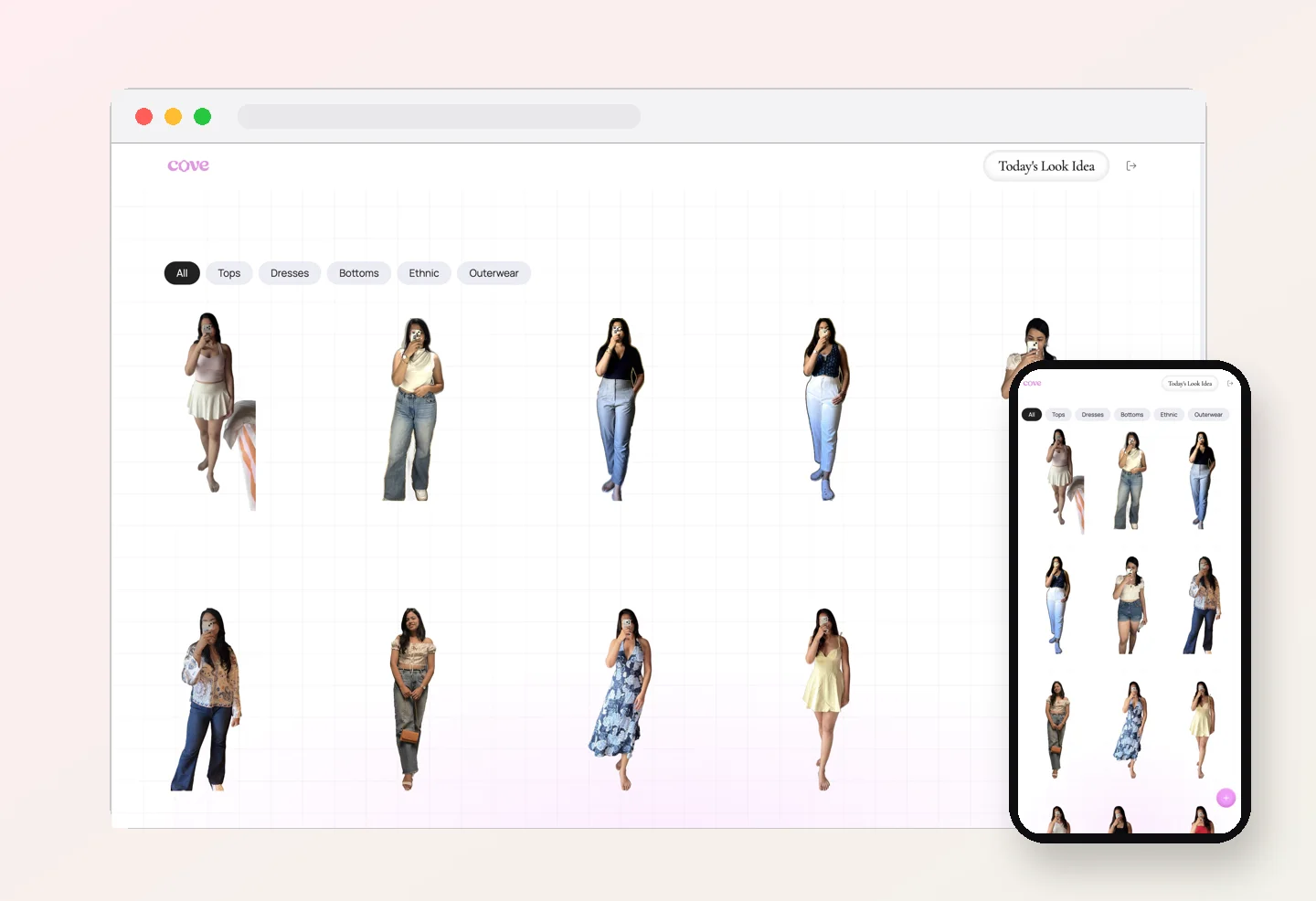
Cove turns a physical wardrobe into a searchable digital diary. It’s live on desktop and mobile. Try Cove
Where it Started
For years, my wardrobe lived in my Notes app. Every time I bought an outfit I liked or remembered a piece I owned but kept forgetting about , I'd take a photo and drop it into a note. It half-worked. I had the pictures, but no way to search them, organize them, or actually turn them into outfits. The photos piled up and nothing ever came of them.

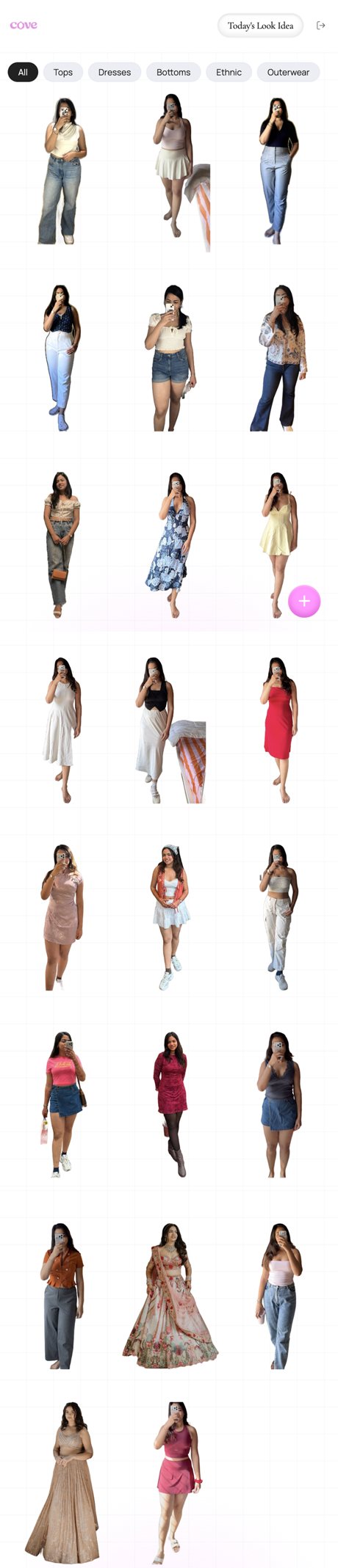
With Cove, I photograph a piece once and it's cut out, catalogued, and ready to style into outfits. I didn't have to imagine a user. I'd been doing this by hand, badly, for years.
I designed and shipped Cove end to end. I defined the product strategy, interaction model, information architecture, design system, and implementation. Claude Code generated production code from my specifications and tickets while I directed architecture, reviewed every implementation, and owned the product from idea to launch.
The bet
The real risk here wasn't technical. It was behavioural. I'd tolerated the friction of the Notes app because it was mine, but no one else would. Most wardrobe apps lose users at the same point: the first few uploads. Ask someone to photograph, crop, and label forty items, and you'll lose them by item three.
So I designed the product around a single question:
How quickly can one garment go from hanger to catalogued?
The answer became a simple three-step flow.
- Photograph
- Automatic background removal
- One-tap save
The craft
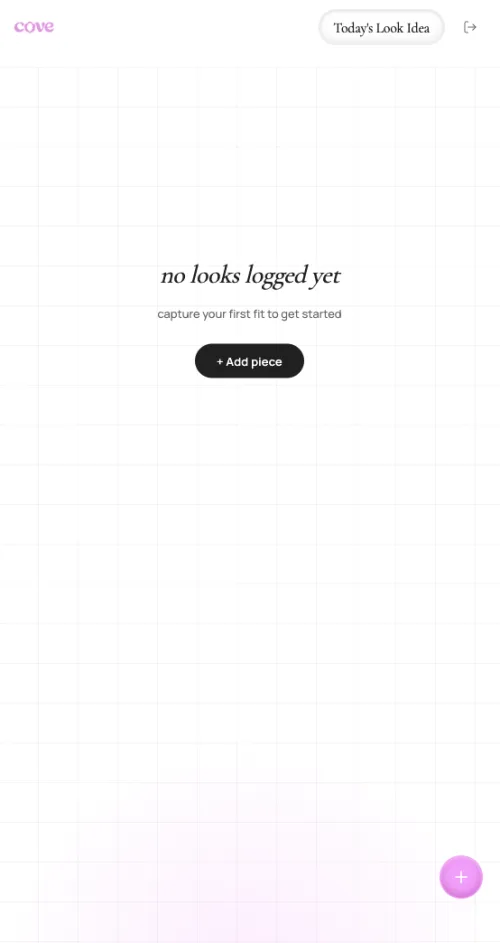
Designing the empty state
A brand-new wardrobe is where these apps lose people. Cove opens with one clear action: capture your first item. No onboarding tour and no unnecessary decisions before users experience value.
A diary, not a filing cabinet
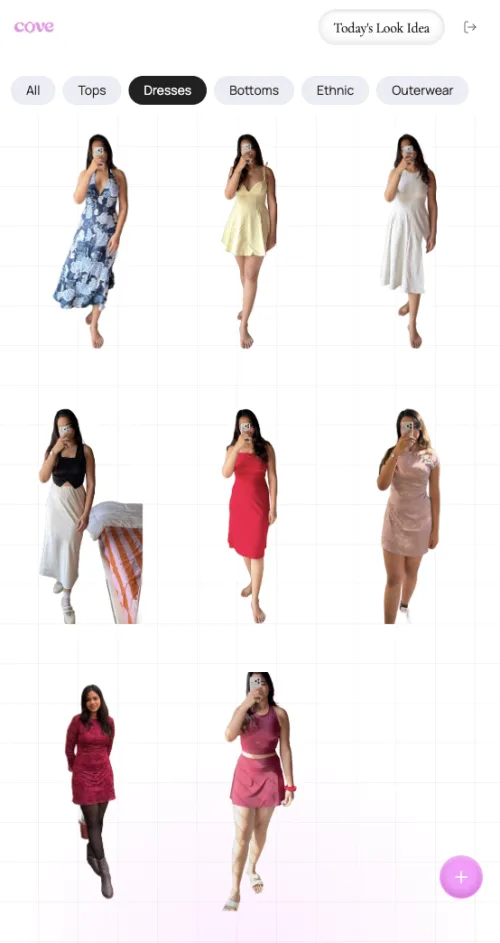
Pieces accumulate in a searchable, filterable stream instead of a hierarchy of folders.
To support both browsing and retrieval, I introduced category filters that let users quickly explore their wardrobe by garment type while keeping the diary-like experience intact.
Styling you can predict
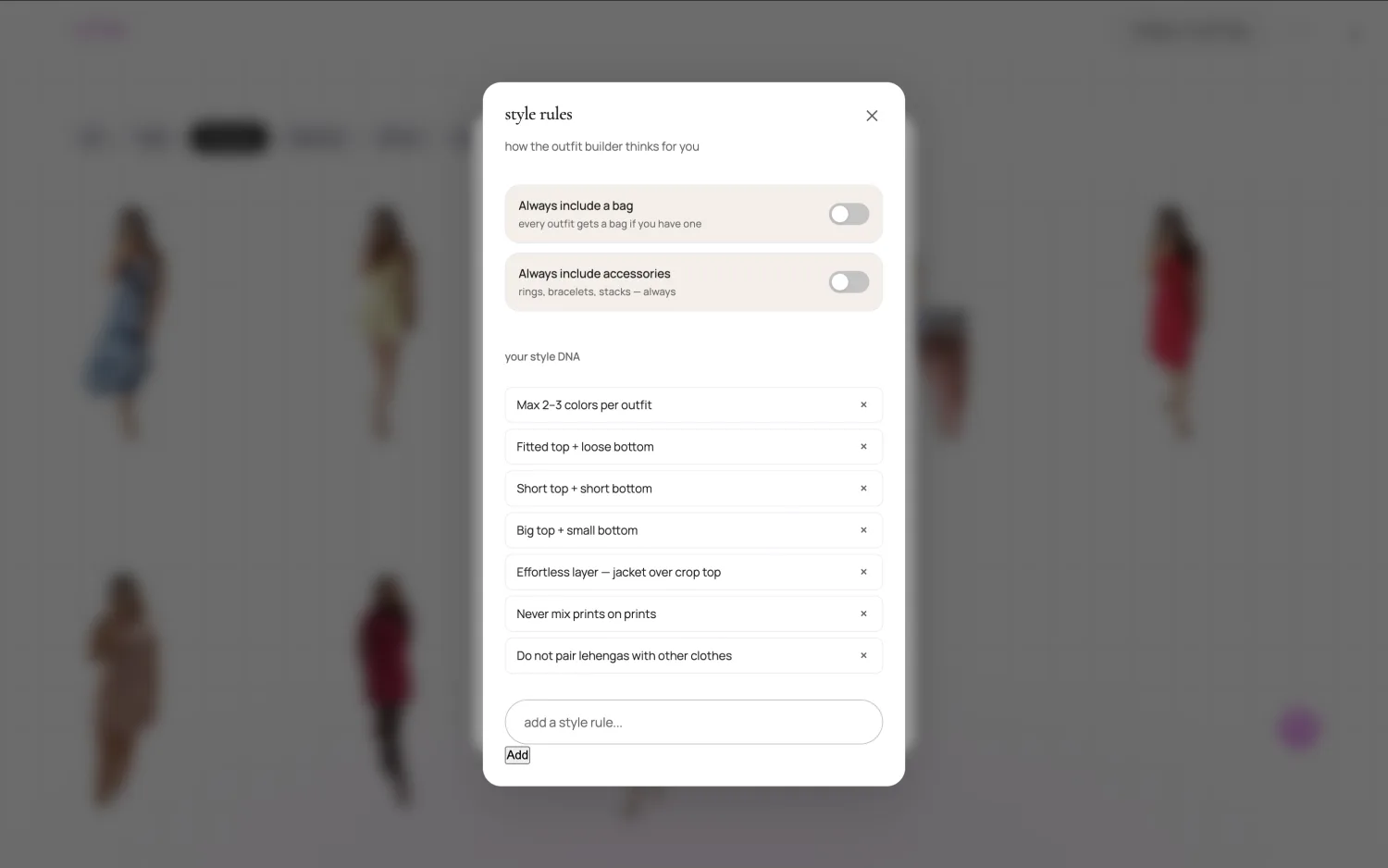
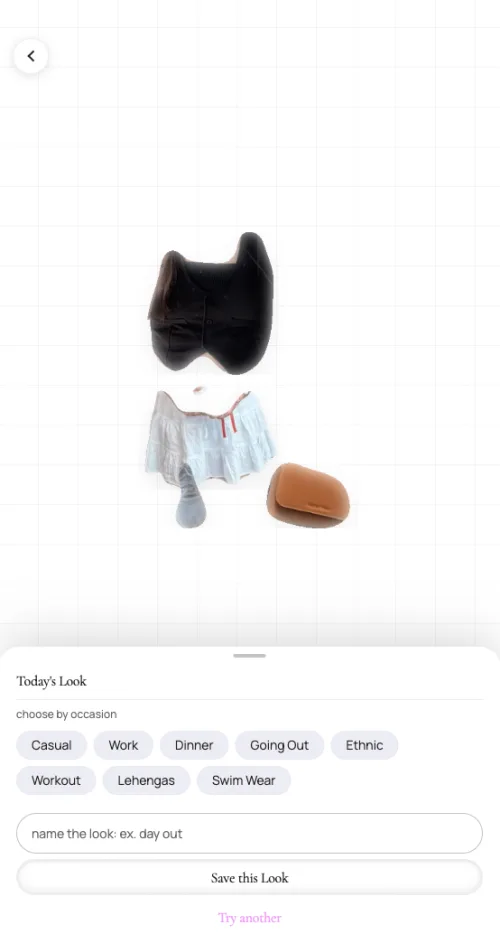
“Today’s Look Idea” generates outfits from saved pieces based on occasion, while Style Rules let users define constraints such as “Always include a bag.”
Instead of relying on an ML recommendation model, I chose transparent rules so users always understand why an outfit was suggested.
Iterations
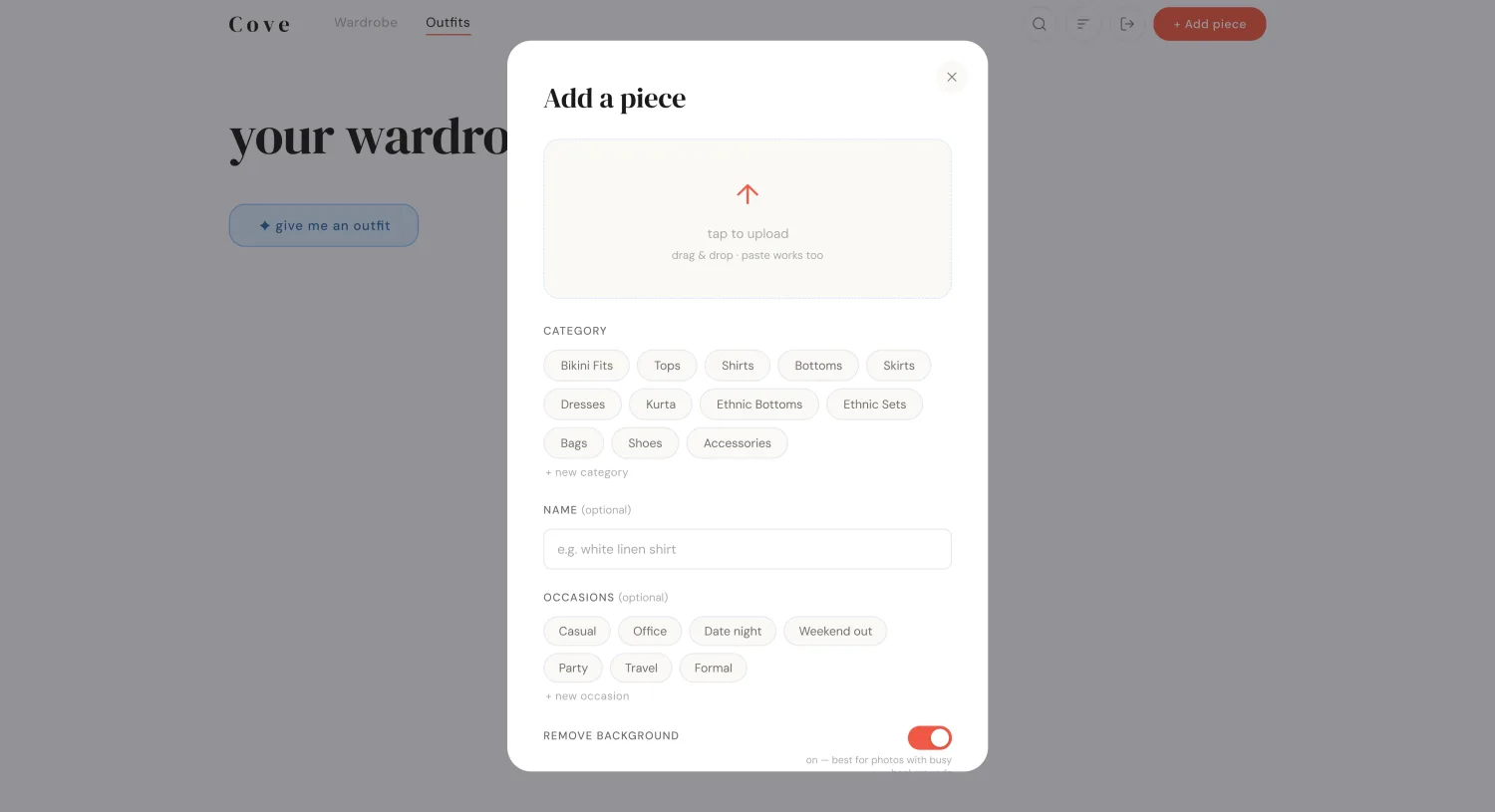
My first version treated every upload like a form. Users named garments, assigned categories, occasions, and processing options before saving. After living with the product, I realized every extra decision slowed the one thing Cove needed to optimize: getting clothes into the wardrobe. I simplified the flow to capture first and let the product organize everything else.
The architecture decision
Background removal became the core technical challenge.
Processing images locally was essentially free but unreliable on mobile. A fully cloud-based approach could have been more reliable but increased operating costs with every upload.
Instead of committing to one solution, I built a hybrid architecture. Desktop performs background removal locally whenever possible, while mobile falls back to the cloud when device constraints require it.
The result is a near-instant capture experience while keeping the product essentially free to operate.
Designing around imperfection
Background-removal models occasionally leave imperfect edges. Instead of trying to eliminate every artifact, I designed the interface to absorb those imperfections.
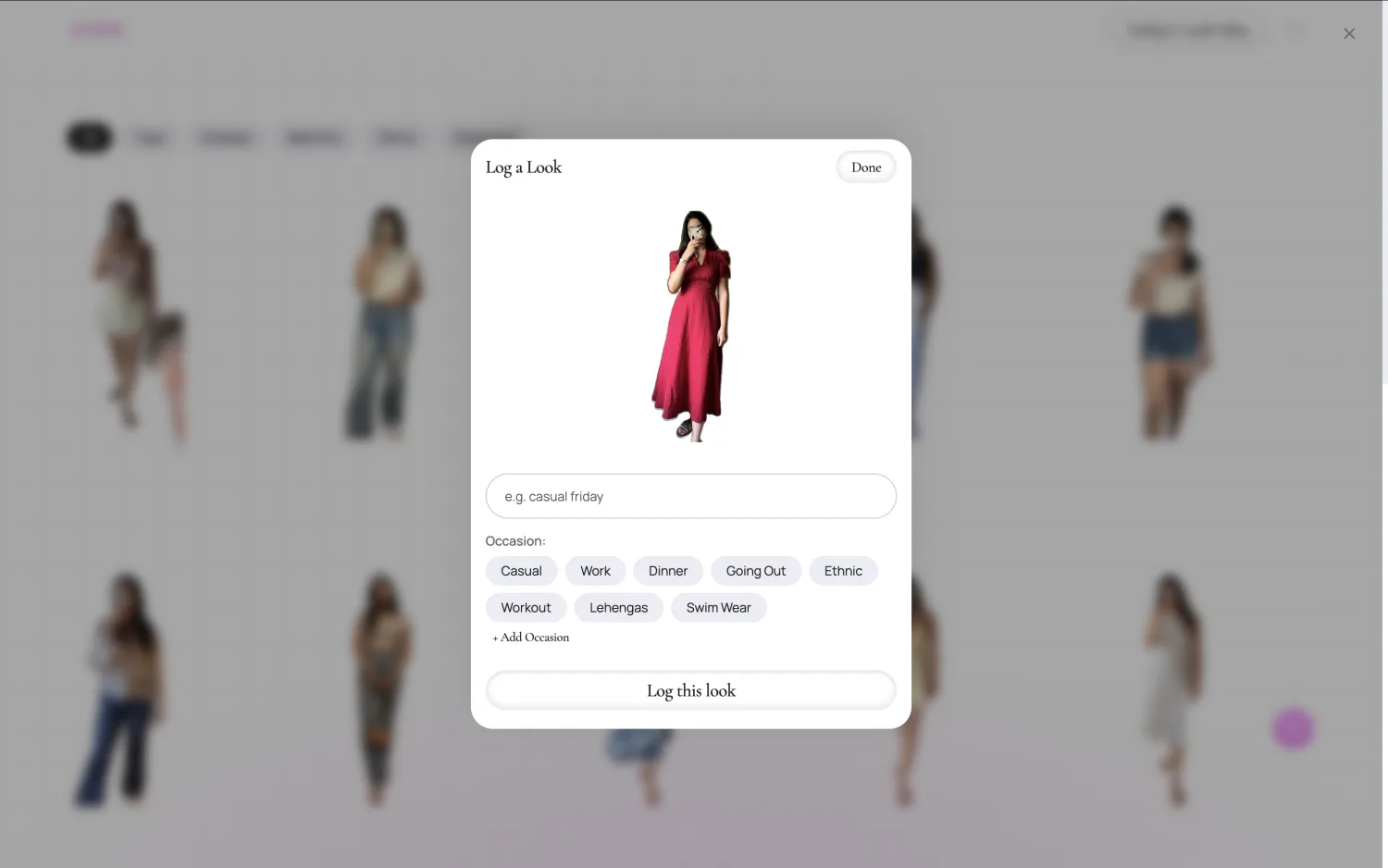
Each garment is automatically placed on a consistent 2:3 portrait canvas with fixed framing, so every card aligns visually regardless of the original image. A warm cream background softens small artifacts, while consistent cropping prevents distracting shifts across the grid.
The design absorbs the imperfections so the user never has to notice them.
The systems layer
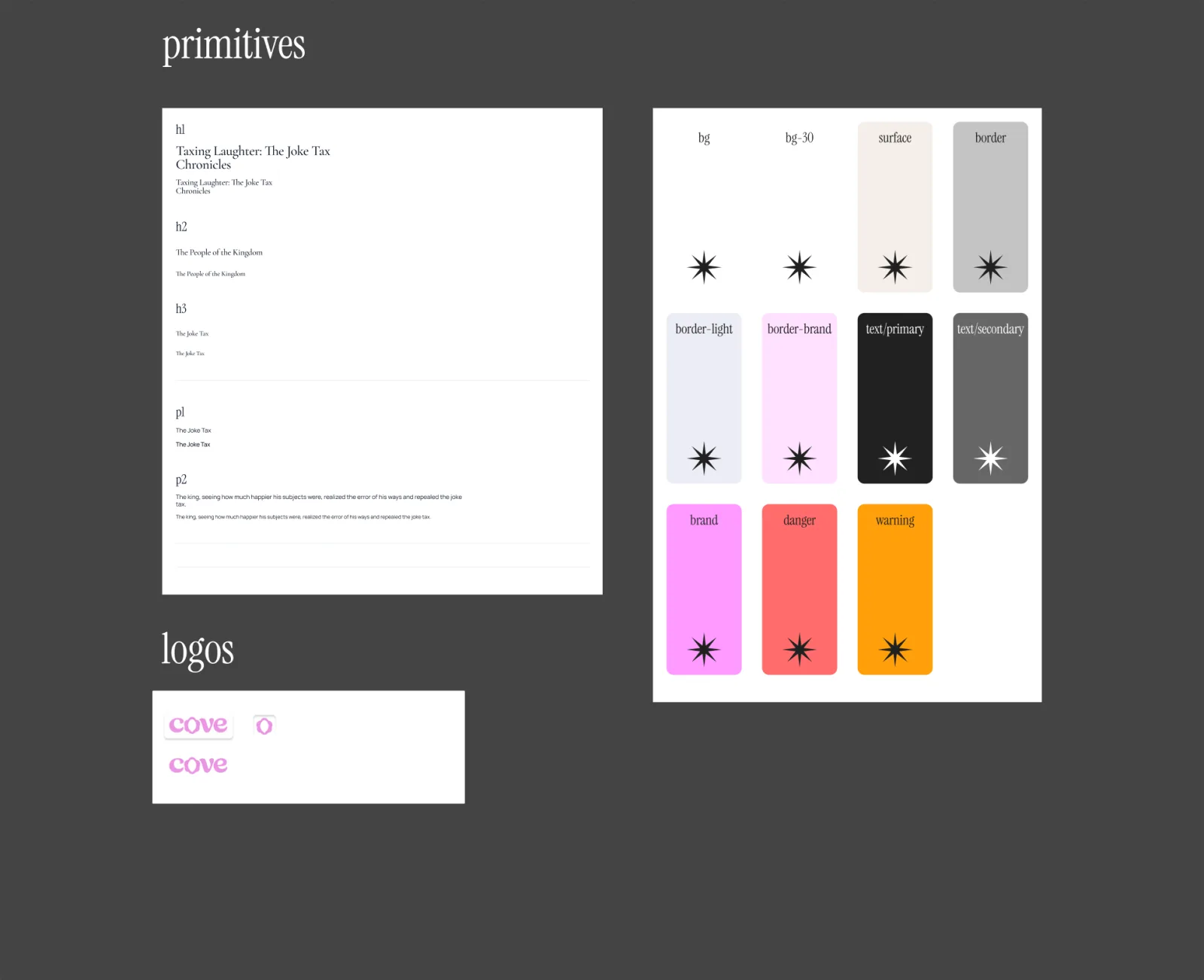
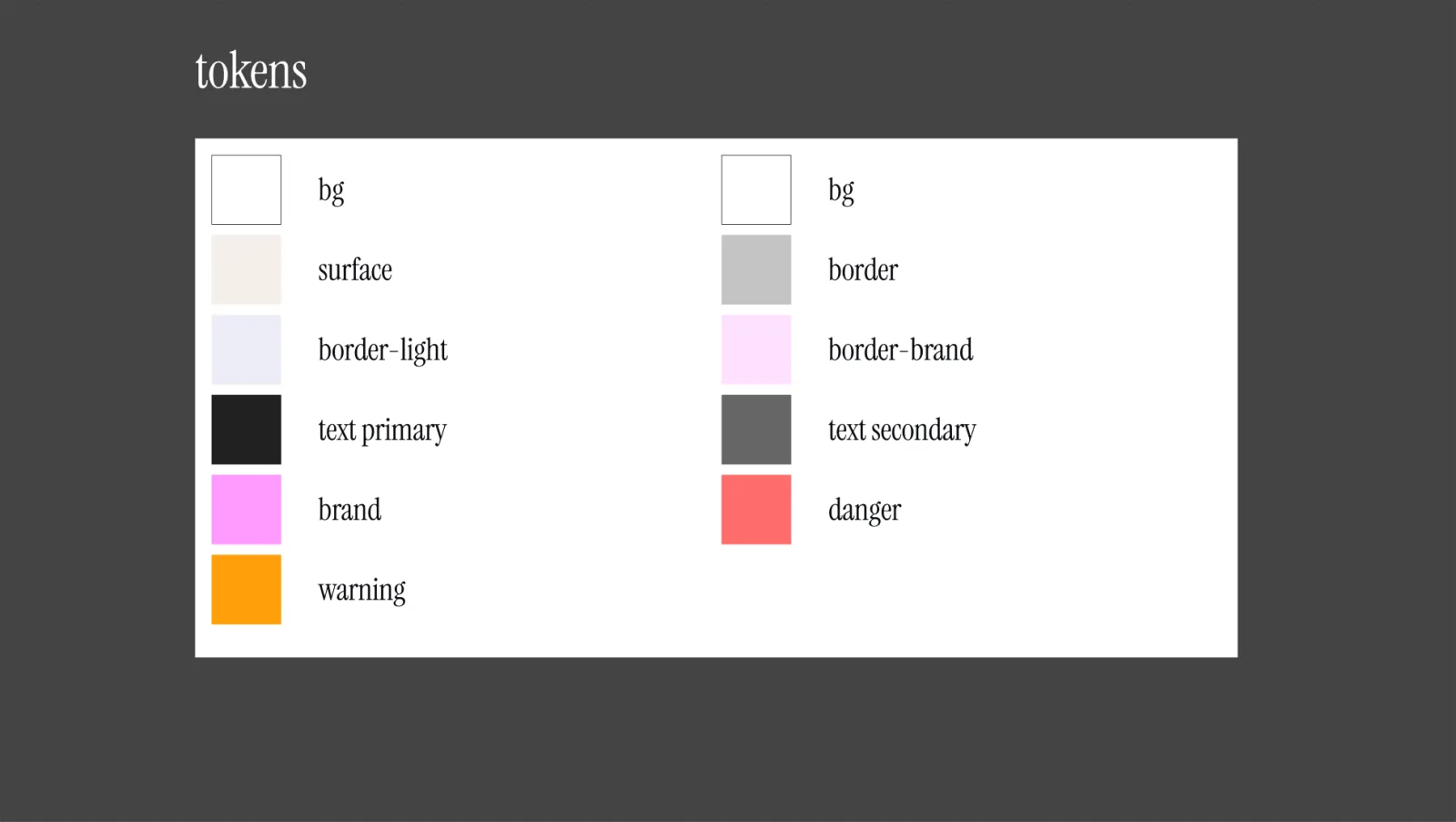
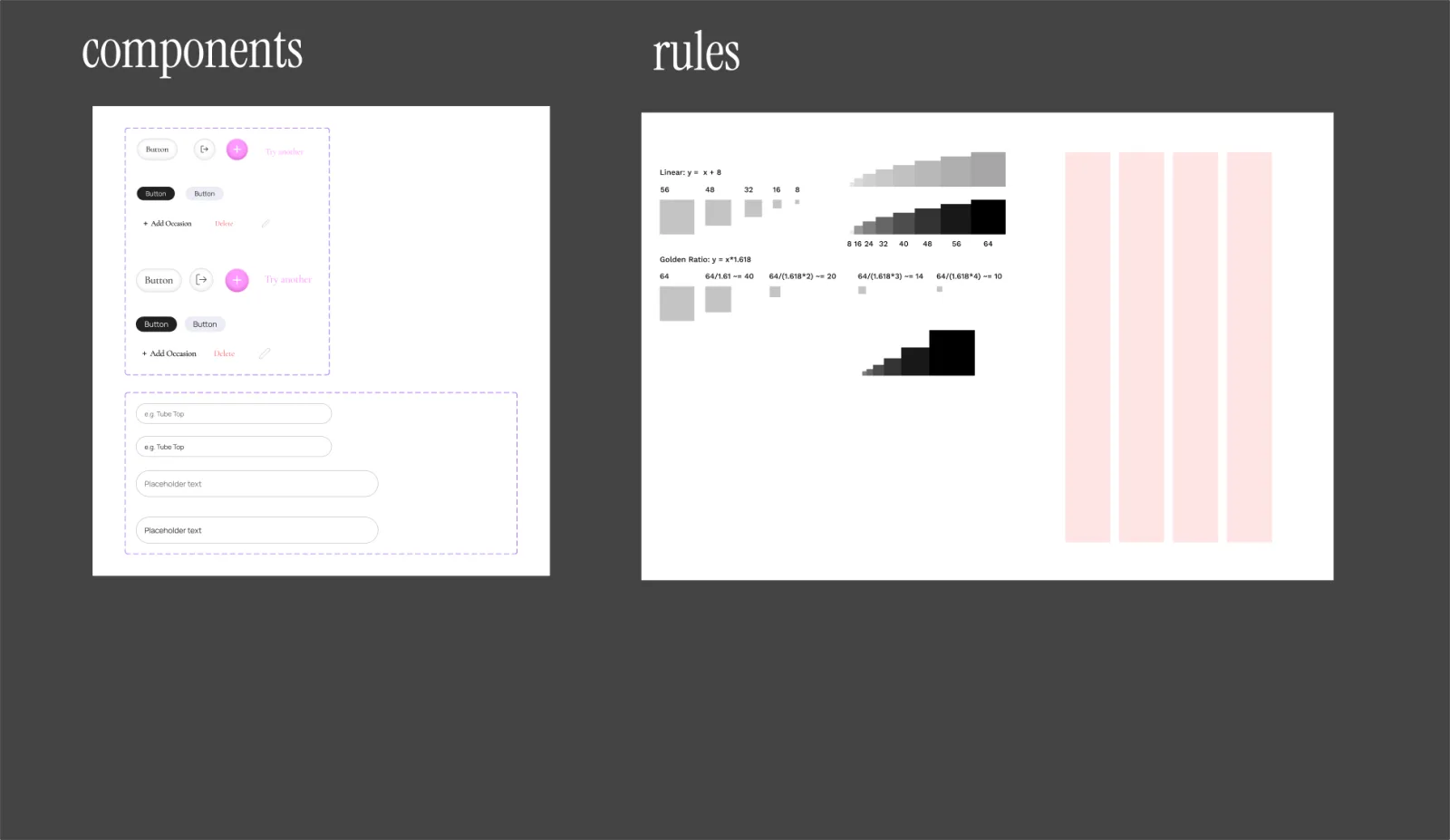
I built a reusable design system covering typography, spacing, motion, color tokens, and shared components across desktop and mobile. Although created for a single product, the system was designed with the same scalability principles I’d apply when building design systems inside a larger organization.
Where it stands
Cove is live and fully functional, but I haven’t launched it publicly yet.
Rather than optimizing for downloads, my first goal is to validate whether the problem resonates. I’m launching a demo site with a waitlist to understand genuine interest before investing in the operational costs of running background removal and AI services at scale.
The north-star metric isn’t how many clothes someone catalogs during their first week — that’s a one-time activity. The real signal is whether they’re still creating and saving outfits a month later.
AI made it possible to build the product alone. Understanding the onboarding problem is what made it worth building.